Construction supervision at the QMHP Staff Housing Project, Phase 3 Quanta, is a complex process, but SVG Engineering has implemented it effectively, making a significant contribution to ensuring the project is completed to the required quality, safety, and schedule. The supervisory unit's role is not only to inspect but also to act as a bridge between design and construction, helping the investor realize the goal of construction housing for staffs.
SUPERVISING THE CONSTRUCTION OF THE QMHP STAFF HOUSING PROJECT (QUANTA PHASE 3) IN VIETNAM
 - Investor: QMHP Co., Ltd.
- Address: My Thuan Industrial Park - My Loc Ward - Ninh Binh province - Viet Nam
- Construction Project: The staff housing Project - Quanta Phase 3
- Mission: Construction Supervision of QMHP staff housing Project
- Supervision Unit: Sao Viet Construction Design Consulting and Inspection Joint stock Company (SVG Engineering)
- Year of implementation: 2025
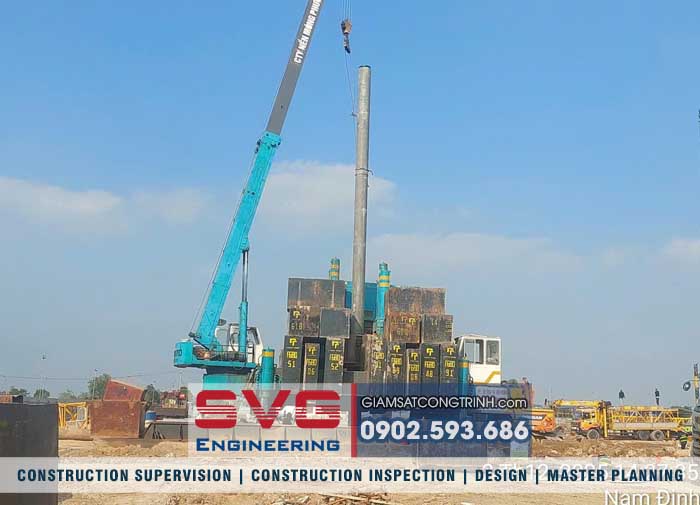
CONTENTS OF SUPERVISING THE CONSTRUCTION OF THE QMHP STAFF HOUSING PROJECT (QUANTA PHASE 3) IN VIETNAM
1. Supervision of the Preparation and Foundation Phases:
-
Legal Document Review: Check construction permits, design documents, and construction contracts.
-
Surveying Supervision: Inspect and verify coordinate control networks and elevation levels. Ensure accurate positioning of the construction site according to the design.
-
Excavation and Leveling Supervision: Check slope gradient and landslide prevention measures.
-
Foundation Construction Supervision:
-
Piles: Monitoring the pile driving process (pressure, depth) and inspecting pile quality (static testing, ultrasonic testing).
-
Foundation/Pile Cap Concrete: Checking reinforcement (type, spacing, joints), formwork, and especially supervising the pouring process and taking concrete samples.
2. Supervision of the Structural Frame Phase:
-
Reinforcement steel supervision: This is the most time-consuming supervision task. Checking the quantity, diameter, and type of steel; the position of reinforcing steel and structural steel, especially at high-stress points such as frame joints, beams, and columns.
-
Concrete Supervision:
-
Check the concrete grade, the delivery note, and conduct on-site acceptance before pouring.
-
Supervise the vibratory compaction process and post-pouring curing (watering, covering).
-
Progress Acceptance: Only allow formwork removal and construction of the next floor when the concrete strength has reached the required level.
3. Supervision of the Completion Phase:
-
Supervision of bricklaying and plastering works: Check the vertical alignment and flatness of the walls. Ensure that the mortar joints and materials meet the required standards.
-
Mechanical and Electrical (M&E) System Supervision:
-
Electrical works: Inspect conduit routing, outlet and switch locations, electrical panel installation, and lighting system testing.
-
Water supply and drainage: Supervise the installation of supply and drainage pipelines, and perform pressure testing to detect leaks.
-
Fire Protection: Supervising the installation of fire protection equipment (sprinklers, fire alarms) and conducting acceptance testing of the system according to standards.
-
Interior/Exterior Installation Supervision: Inspect the quality of doors, flooring, wall cladding (flatness, grout lines), and painting. Ensure that the colors and materials match the samples approved by the client.
QUALITY MANAGEMENT OF PROGRESS AND LABOR SAFETY
1. Quality Management and Documentation:
-
Management System: The construction supervision consultant requires the contractor to prepare and comply with detailed construction methods and the quality management system.
-
Incoming Materials Acceptance: All materials (steel, cement, sand, and gravel) must have valid Certificates of Origin/Certificates of Quality (CO/CQ) and must pass all required tests before being used. The supervising engineer has the authority to request material re-testing at any time.
-
Acceptance Procedure: The acceptance process is carried out in three levels: Contractor Internal Inspection → Supervision Consultant → Investor/Project Management Unit. All works must have a fully completed Acceptance Record before proceeding to the next step.
2. Construction schedule management:
-
Plan Control: The Supervising Engineer monitors the actual progress against the approved Gantt chart.
-
Detection and Resolution of Delays: When progress is delayed, the Supervising Engineer must report to the Client and request the Contractor to provide corrective measures (e.g., overtime, increased manpower, adjustment of construction methods) to get the project back on track.
-
Resource Management: Ensure the Contractor has sufficient manpower, machinery, and materials for each critical phase.
3. Occupational Safety Management, Hygiene, and Environmental Ecology Management
-
Occupational Safety and Health Control: Regularly inspect scaffolding, work platforms, safety nets, railings, and lightning protection systems.
-
Personal Personal Protective Equipment (PPE): Ensure 100% of workers have helmets, shoes, and safety harnesses when working at heights.
-
Incident Prevention: Organize safety training sessions, conduct periodic equipment inspections, and develop incident response plans (fire prevention, evacuation).
RISK MANAGEMENT AND ANNOYANCE HANDLING DURING MONITORING PROCESSES
1. Risk Identification and Classification
2. Measures for Handling Unusual Situations
-
Occupational Safety Incidents: In the event of an accident, the Supervising Engineer must coordinate with the Contractor to immediately stop construction in the affected area, urgently report to the Client and relevant authorities, and re-inspect the Contractor's entire occupational safety system.
-
Handling Delays in Acceptance Testing: If the Contractor intentionally continues construction before the phase-by-phase acceptance test is completed, the Supervising Engineer must prepare a Violation Report, request a temporary halt to further work, and compel the Contractor to conduct a re-acceptance test or demolish the structure (if the quality violation is serious).
3. Incident Record Keeping
All risks and unusual situations must be documented in detail, including: Date of occurrence, description of the incident, remedial measures, and corrective action results. This is crucial legal documentation for subsequent warranty and maintenance phases.
IMAGES OF SUPERVISING THE CONSTRUCTION OF THE QMHP STAFF HOUSING PROJECT (QUANTA PHASE 3) IN VIETNAM
越南验厂费用
如果您需要有关越南工厂检查问题的支持和建议,请立即致电我们:0902.593.686(Thang先生)或发送电子邮件至:svg.engineer@gmail.com…… 真诚地!
 |
 |
|
越南建筑咨询
Mobile/Zalo
Mr. Thang 0902.593.686
|
越南建筑咨询
Wechat
Mr. Thang 0902.593.686 |
联系我们:
星越设计咨询与建筑鉴定股份公司
🏢 海防市公司总部: SVG 大厦 7 楼 - Bui Vien 街 - An Bien 区 - Hai Phong 市
☎ 电话: (0225) 3.747.819
📞 移动电话去: 0902.593.686
📧 电子邮箱: svg.engineer@gmail.com
🌎 越南网站: giamsatcongtrinh.com
🌎 英语网站: en.giamsatcongtrinh.com
🌎 中国网站: cn.giamsatcongtrinh.com
 Youtube 渠道: https://www.youtube.com/@svgengineering
🏢 代表处:
- 河内首都:Ha Noi 市 Dong Da 区 Hoang Cau 街 81 号 9 号
- 胡志明市: Ho Chi Minh 市 Ban Co 区 Cao Thang 街2/1C
- 顺化省: Hue 市 Thanh Thuy 区 Dong Nam Thuy An 21街 M25 地段